The unpriced AI risk in the biggest IPO in history
Shared by Just, Legal Association for Just Technologies. Commentary on the coalition update of 3 June 2026.
The report was produced by Guidelight AI Standards, LASST (partner of Just), Encode AI, and The Midas Project.
One of our partners, LASST, with Guidelight AI Standards, Encode AI, and The Midas Project, has published an analysis of the SpaceX prospectus and the AI risks behind it. We are sharing it because it is a live example of the argument we make every day: the legal tools to hold frontier technology to account already exist. What is usually missing is the will to use them. This briefing sets out the coalition's findings and what they mean for lawyers, policymakers, and funders in Europe.
SpaceX is heading for what is on track to be the largest public offering ever recorded. The prospectus is now public, a 277-page document that, the coalition finds, rests most of the company's future value on artificial intelligence. Elon Musk has said he will not step back from pushing the frontier of AI capability, and the filing confirms the plan: keep scaling Grok through further generations, training toward, in the prospectus's own words, models of "multiple trillions of parameters." [1]
The coalition read the document with two questions. Does SpaceX explain how it will manage the risks of the models it now confirms it will build? And does it show that it has the will and the capacity to do so? On both, the answer they reach is a clear no.
1. The risks go unnamed
Biological-weapons uplift, large-scale cyberattacks, and loss of control are treated as central safety concerns by OpenAI, Anthropic, and Google DeepMind. In SpaceX's prospectus, the coalition finds, they are not mentioned at all. This is not for lack of awareness inside the company: xAI's own Grok 4 model card already evaluates the model's capacity to contribute to some of these harms.
What the filing offers investors instead, the report notes, is generic language: that AI regulation is shifting, [2] that AI products may carry liability, [3] and that some outputs are more provocative by design, including the possibility of nonconsensual and exploitative imagery. [4] Of the company's documented safety failures, only the Grok "undressing" episode surfaces. The incidents in which the model produced antisemitic content and referred to itself as "MechaHitler," made private conversations searchable, or generated unprompted "white genocide" claims do not appear.
2. Little sign of the capacity to do better
The coalition's earlier report set out six safety practices that Google DeepMind, OpenAI, and Anthropic have each adopted and that xAI, at the time of writing, had not:
Table 1. The coalition's comparison of xAI's safety practices with those of Anthropic, OpenAI, and Google DeepMind. Full detail and citations appear in the original report.
The gap in practice tracks a gap in people. As of 2025, the coalition reports, citing the Washington Post, xAI's safety team numbered "just two or three people," against roughly 200 working on safety at OpenAI. The prospectus does not say whether SpaceX will close either gap, even as it tells investors the company expects AI to converge rapidly toward artificial general intelligence. [5] One reasonable reading of what the filing leaves out: the company intends to carry its record forward, not correct it.
At a glance:
- Zero mentions of bio, cyber, or loss-of-control risk in the prospectus.
- Two to three people on xAI's safety team in 2025, against roughly 200 at OpenAI.
- $1.75 trillion projected valuation at offering.
- 3% of shares needed to file a resolution, a floor of $52.5 to $100 billion.
3. Investors who pay will not be able to steer
Where a prospectus is silent on managing a specific risk, what remains is the company's general governance. Here the coalition's reading is stark. Musk will be chief executive, chief technology officer, and chair, controlling a majority of the voting power, enough to appoint every director, none of whom need be independent, and to decide any significant question the company faces.
The usual checks are, in practice, out of reach. Filing a shareholder resolution requires 3% of voting shares; at a projected $1.75 trillion valuation, the report calculates a floor of $52.5 billion, and closer to $100 billion once Musk's non-transferable Class B shares are counted. [6] Under Texas law, where the company will incorporate, shareholders cannot sue directors directly for breaching their duties; they can act only derivatively, and only if they hold 3%. [7] Disputes, including securities-fraud claims, are routed to a Texas business court created in 2024, or failing that to mandatory arbitration. No class actions. No jury.
4. What investors are being asked to accept
Put plainly, the coalition's conclusion is this: investors are asked to fund a company building a technology its own founder once called more dangerous than nuclear weapons, on the strength of a filing that discloses no plan to build it safely, and to do so knowing that, once the offering closes, they will have almost no way to insist otherwise.
The instruments already exist
This is where the report speaks directly to our work. The coalition does not ask for a new law. It asks a company to disclose the risks it plans to create, and it asks investors to use the voice they already have before the offering closes. Disclosure is a legal instrument, not a courtesy. The right to be told what you are buying, and to price the risk you are being asked to carry, is already written into the frameworks that govern public markets.
For European readers, the point carries further. Pension funds, asset managers, and sovereign investors across Europe will be offered a place in this IPO, and they hold it under duties that already exist: the prudent-person principle, stewardship expectations, sustainability-risk disclosure, and the accountability that product-liability rules and the EU's AI framework attach to high-risk and general-purpose systems. None of these needs to be invented. Each gives a lawyer, a trustee, or a regulator a basis to ask the questions the coalition raises, and to treat an unanswered question as a finding in itself.
A filing that stays silent on catastrophic risk is not a gap in the law. It is an invitation to activate it. The law is one of the strongest instruments we are not yet fully using.
The importance of being vigl
If you advise institutional investors, sit on an investment committee, shape AI or securities policy, or fund work that reduces catastrophic risk, this is a moment to use your position.
Read the coalition's update and its original report. Share them with the people around you who will be asked to buy, to rule on, or to regulate this offering. Ask the disclosure questions while the answers can still change.
Authors of the underlying report
Cite these organisations when you share or build on this work:
- Guidelight AI Standards — guidelight.ai
- LASST (partner of Just) — lasst.org
- Encode AI — encodeai.org
- The Midas Project — themidasproject.com
Footnotes and primary sources
Page references are to the SpaceX prospectus, as cited in the coalition report.
- SpaceX Prospectus at 7 (scaling of Grok toward multiple trillions of parameters).
- SpaceX Prospectus at 29 (shifting AI regulatory landscape).
- SpaceX Prospectus at 31 (product-liability risk from AI products).
- SpaceX Prospectus at 30 (more provocative outputs; nonconsensual and exploitative imagery).
- SpaceX Prospectus at 82–83 (rapid convergence toward AGI). See also xAI's Grok 4 model card, which identifies biological-weapons uplift and large-scale cyberattacks as potential risks.
- The 3% floor assumes no Class B shares remain outstanding after the IPO; because roughly half of SpaceX's voting power rests in non-alienable Class B shares held primarily by Musk, the coalition puts the realistic floor closer to $100 billion.
- Gearhart Indus. v. Smith Int'l, 741 F.2d 707, 721 (5th Cir. 1984).
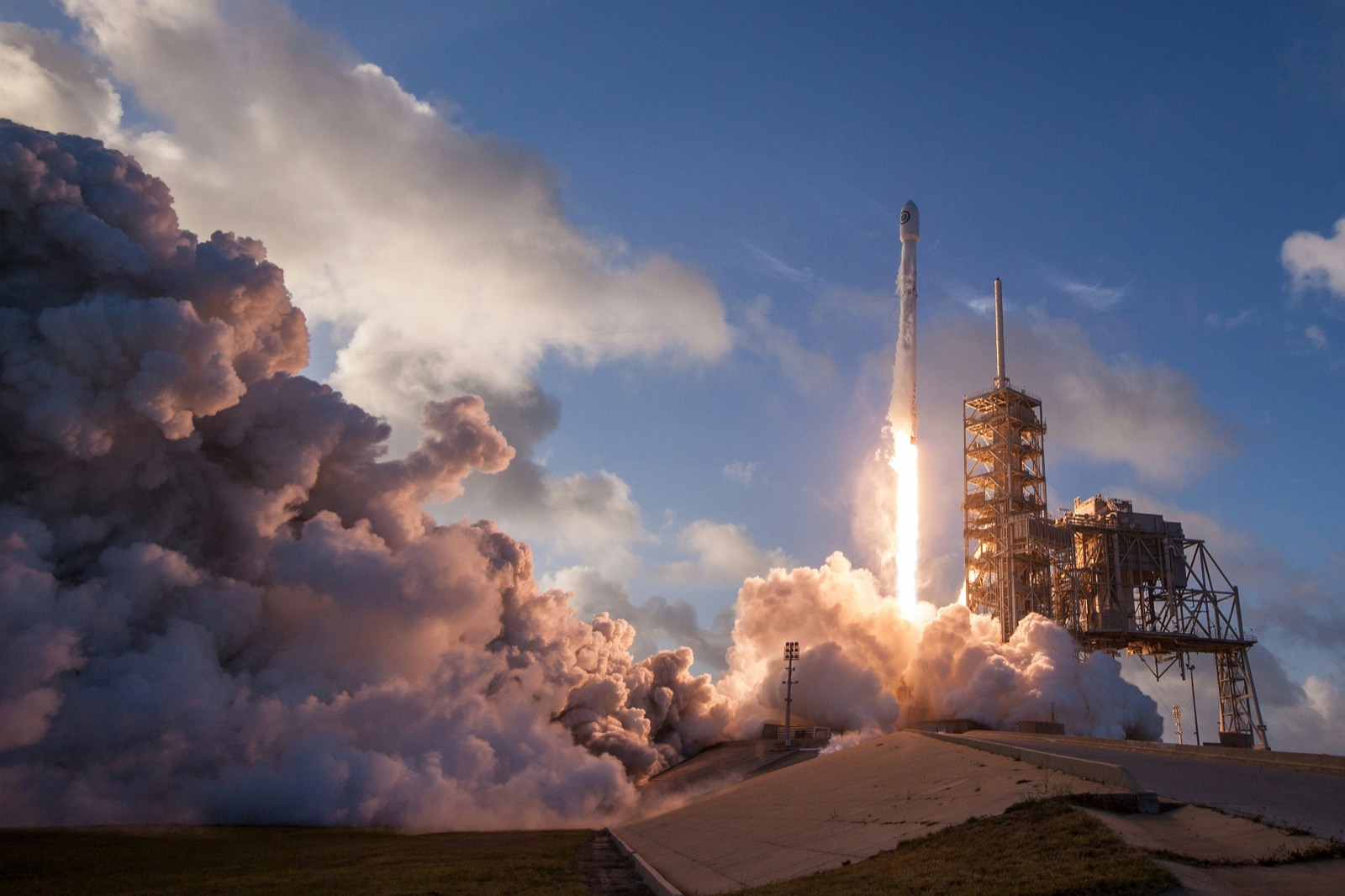
- Photo by SpaceX on Unsplash.com
Disclaimer. This briefing is shared by Just, Legal Association for Just Technologies, for general information, education, and public-interest advocacy. It summarises and comments on analysis published by third parties and is not legal, financial, investment, securities, or tax advice, and is not a recommendation, solicitation, or offer to buy, sell, or hold any security. Just holds no long or short position in SpaceX or in any instrument intended to track it. The underlying findings, opinions, and calculations are those of the coalition authors as of their date of publication; Just does not warrant their accuracy, completeness, or current validity and undertakes no duty to update them. Readers are responsible for their own decisions and should consult qualified advisers licensed in the relevant jurisdiction before acting.
Subscribe to our newsletter